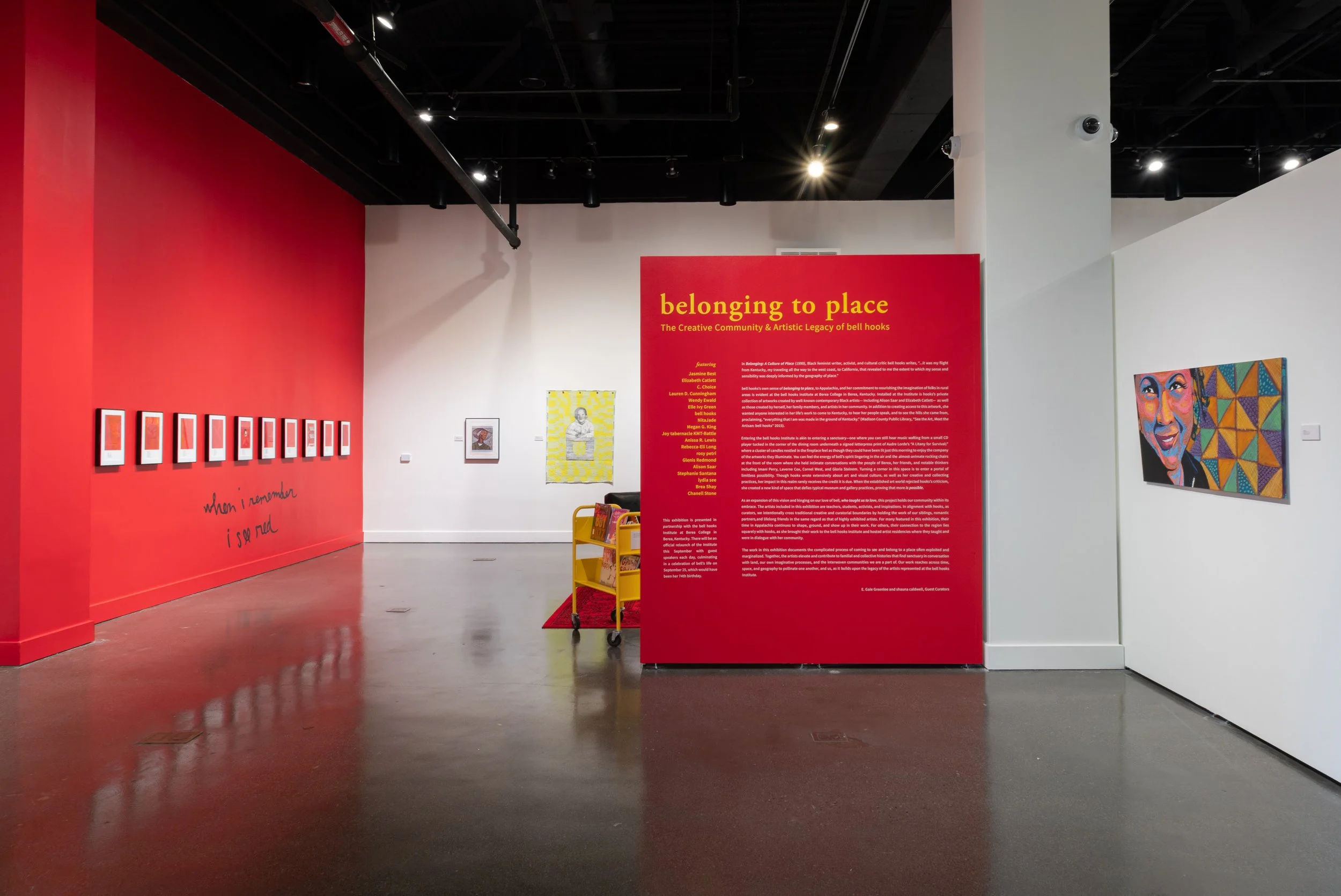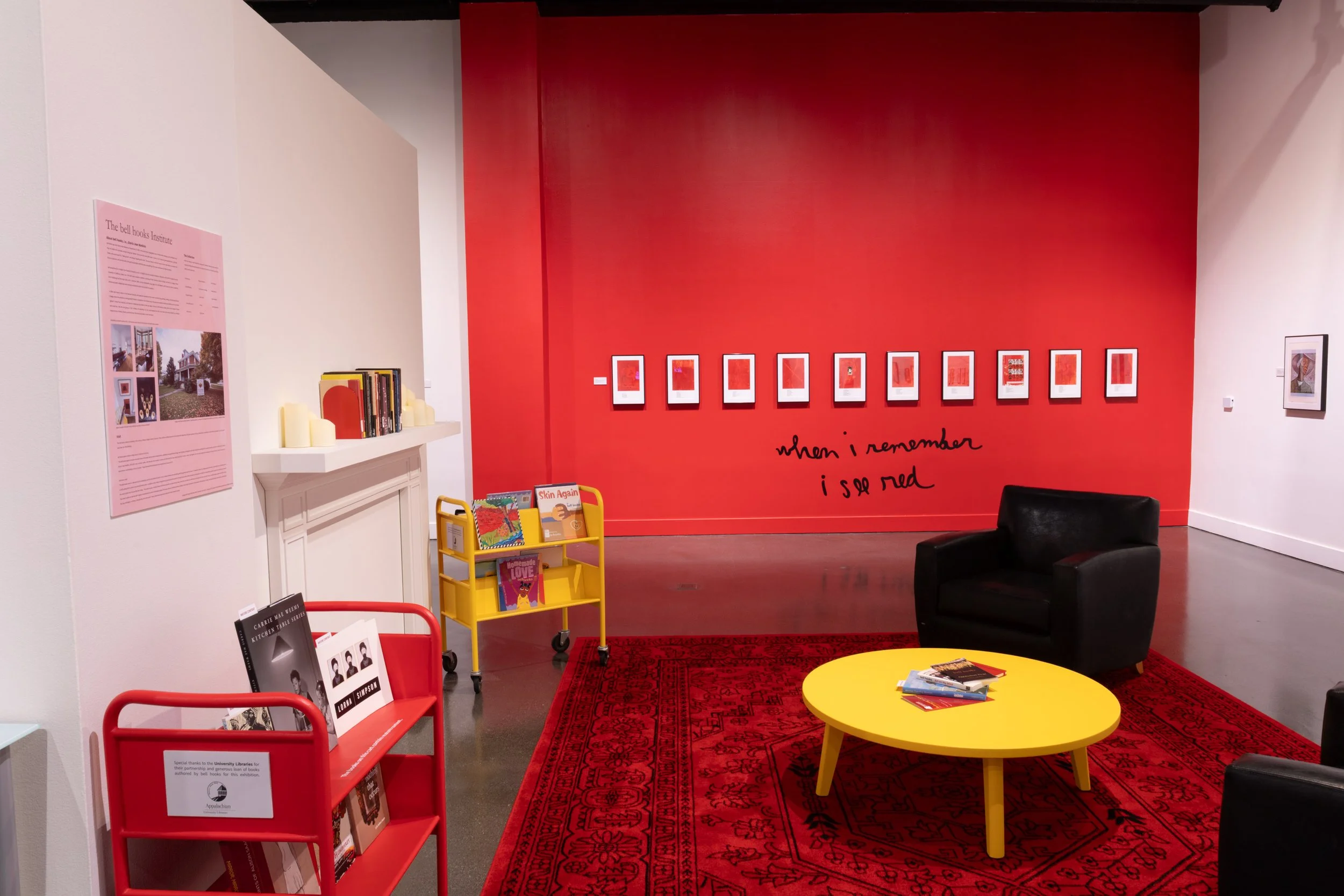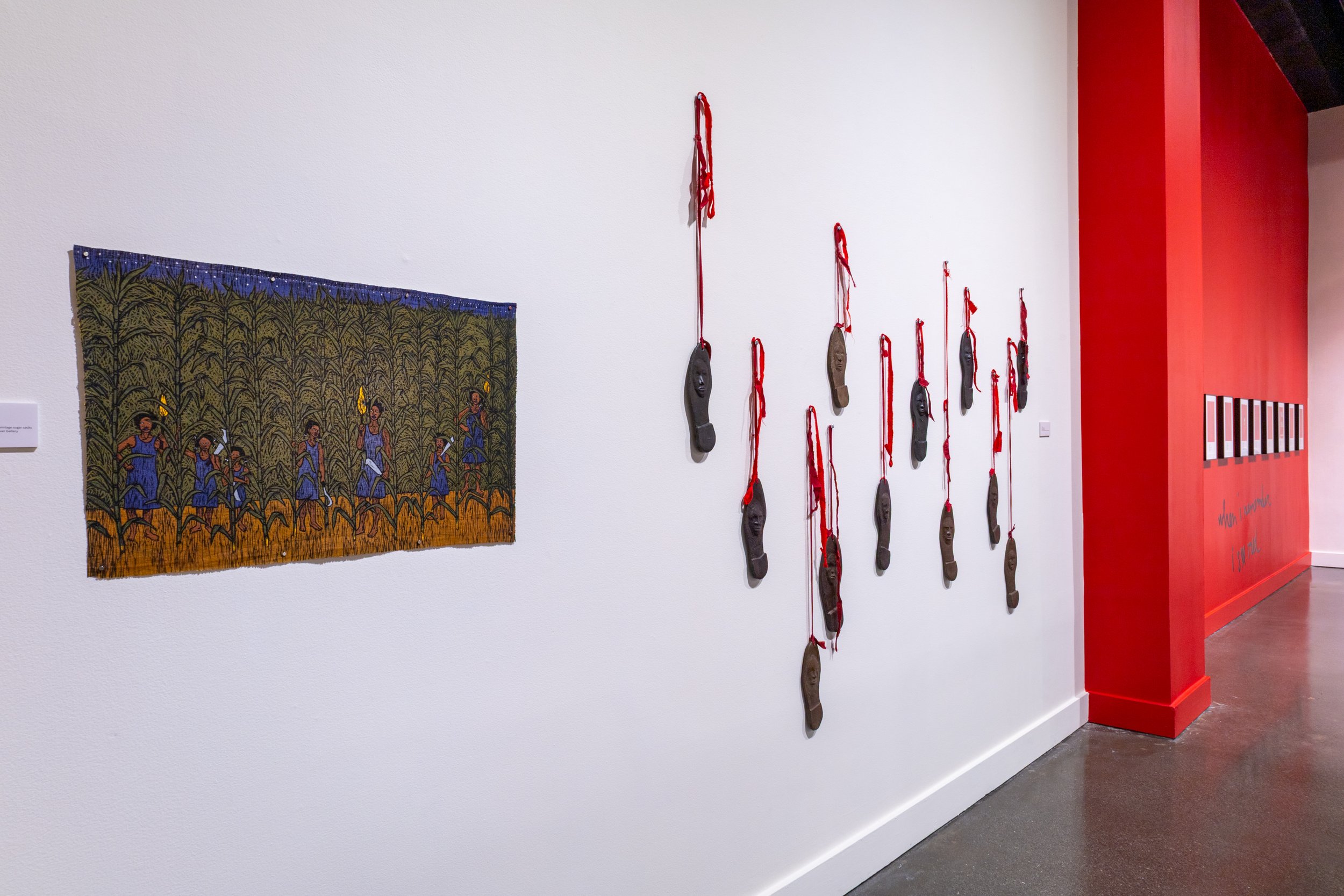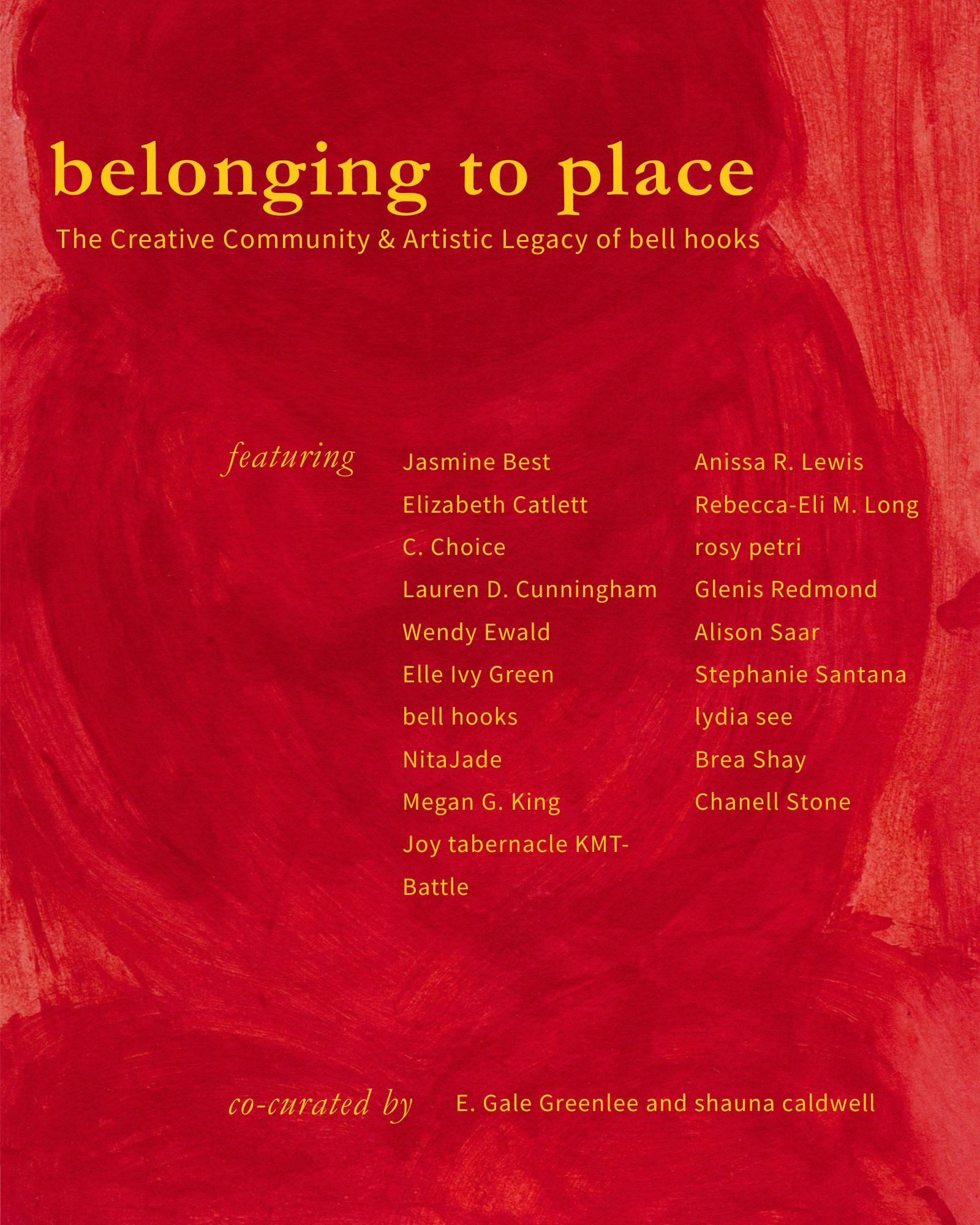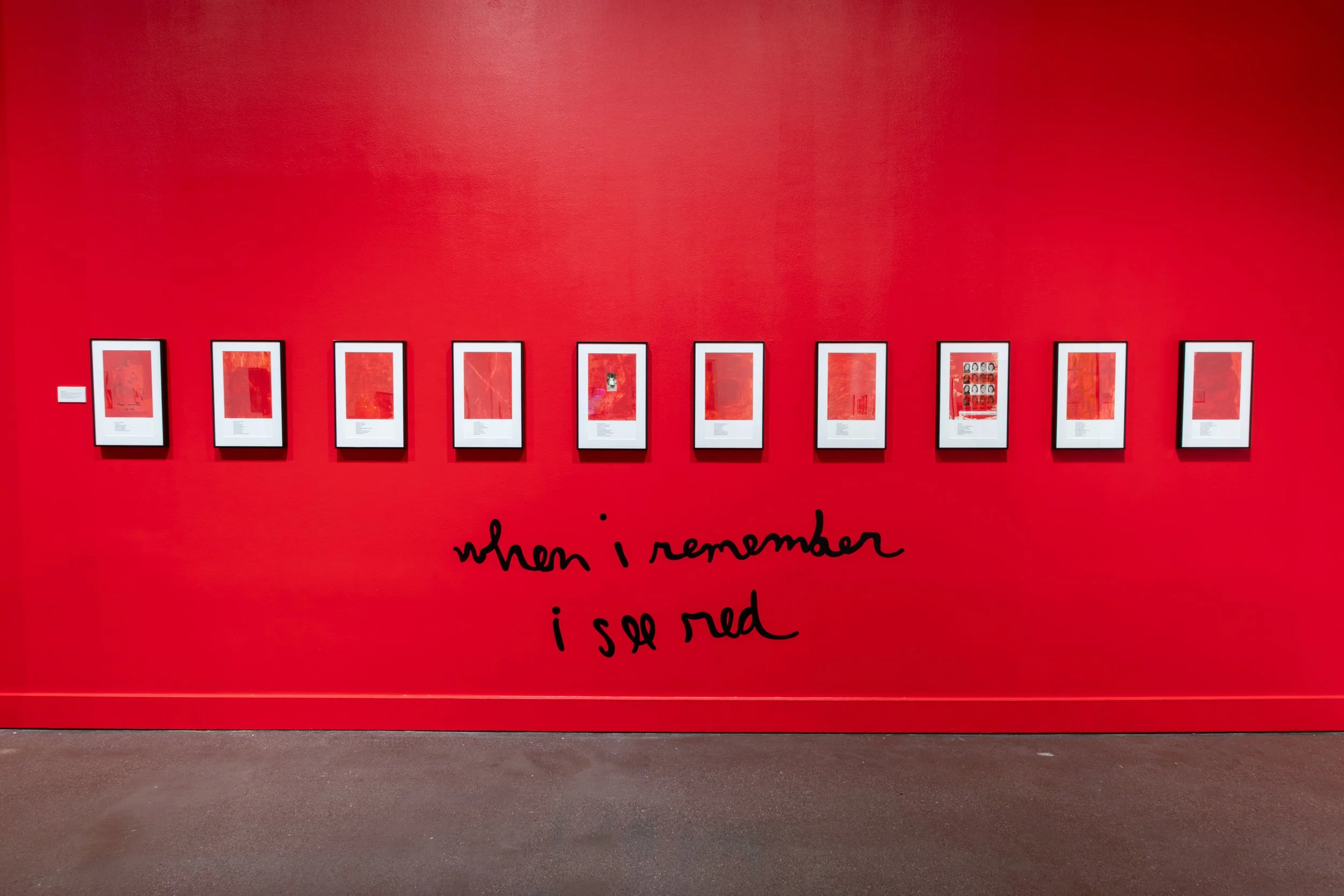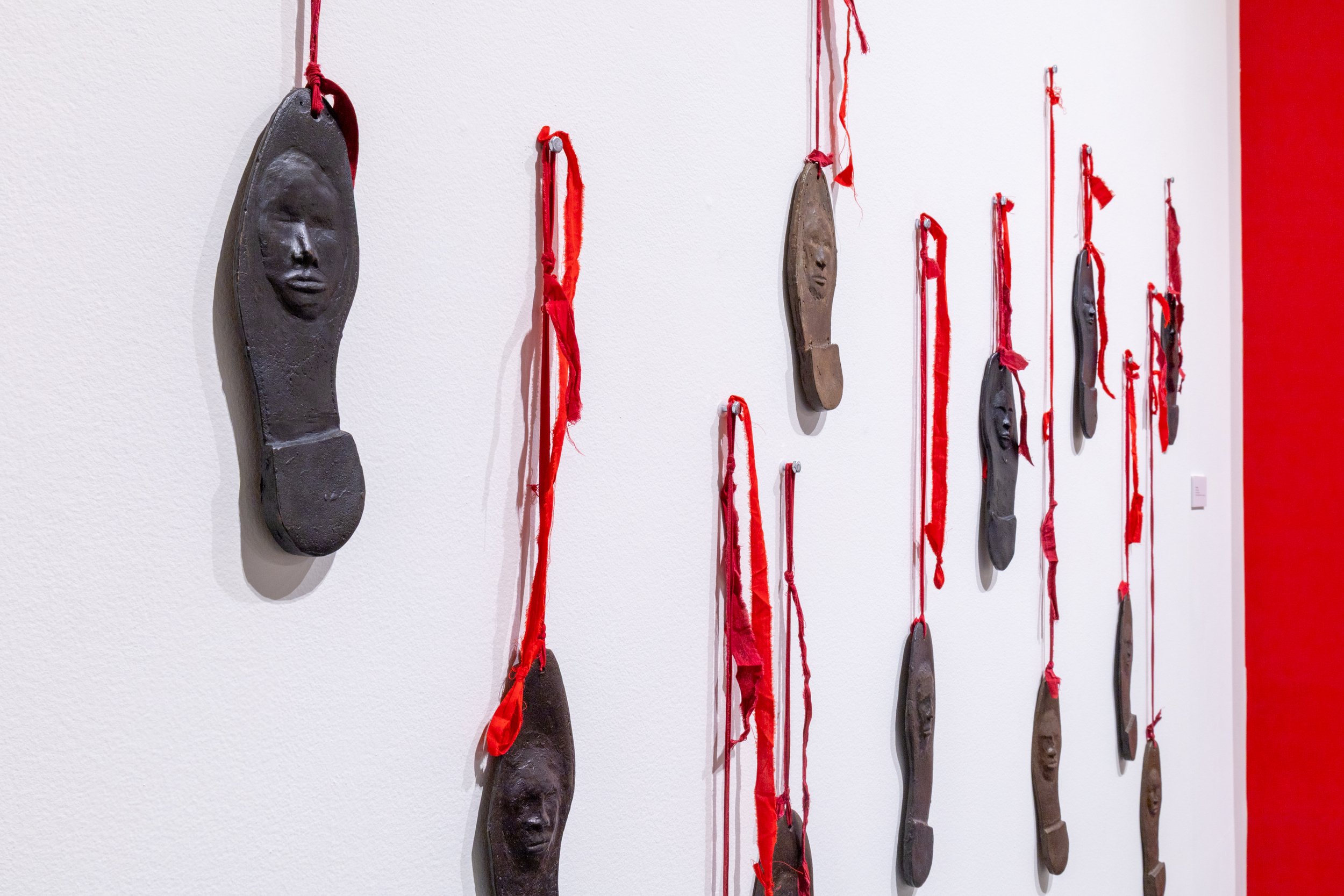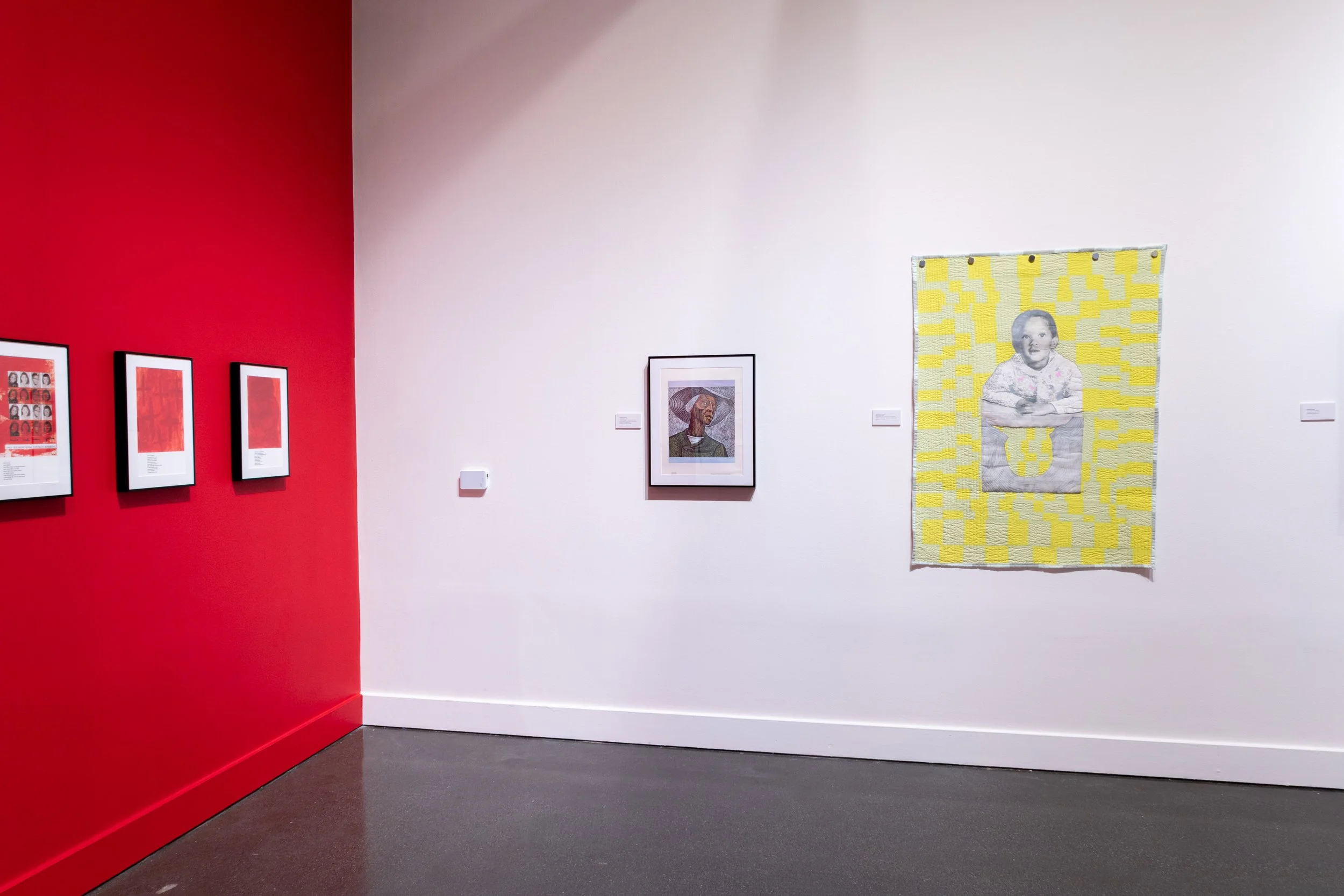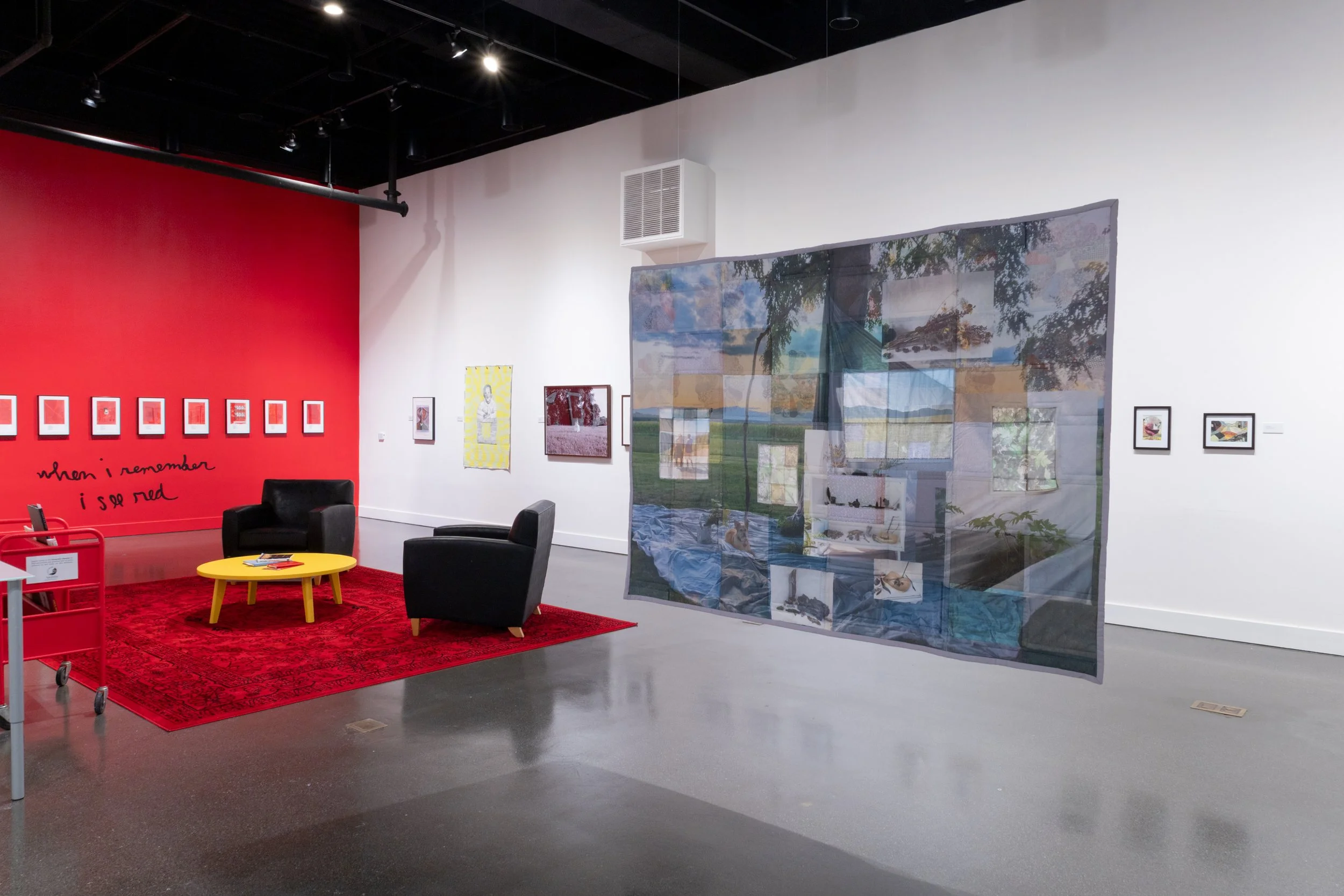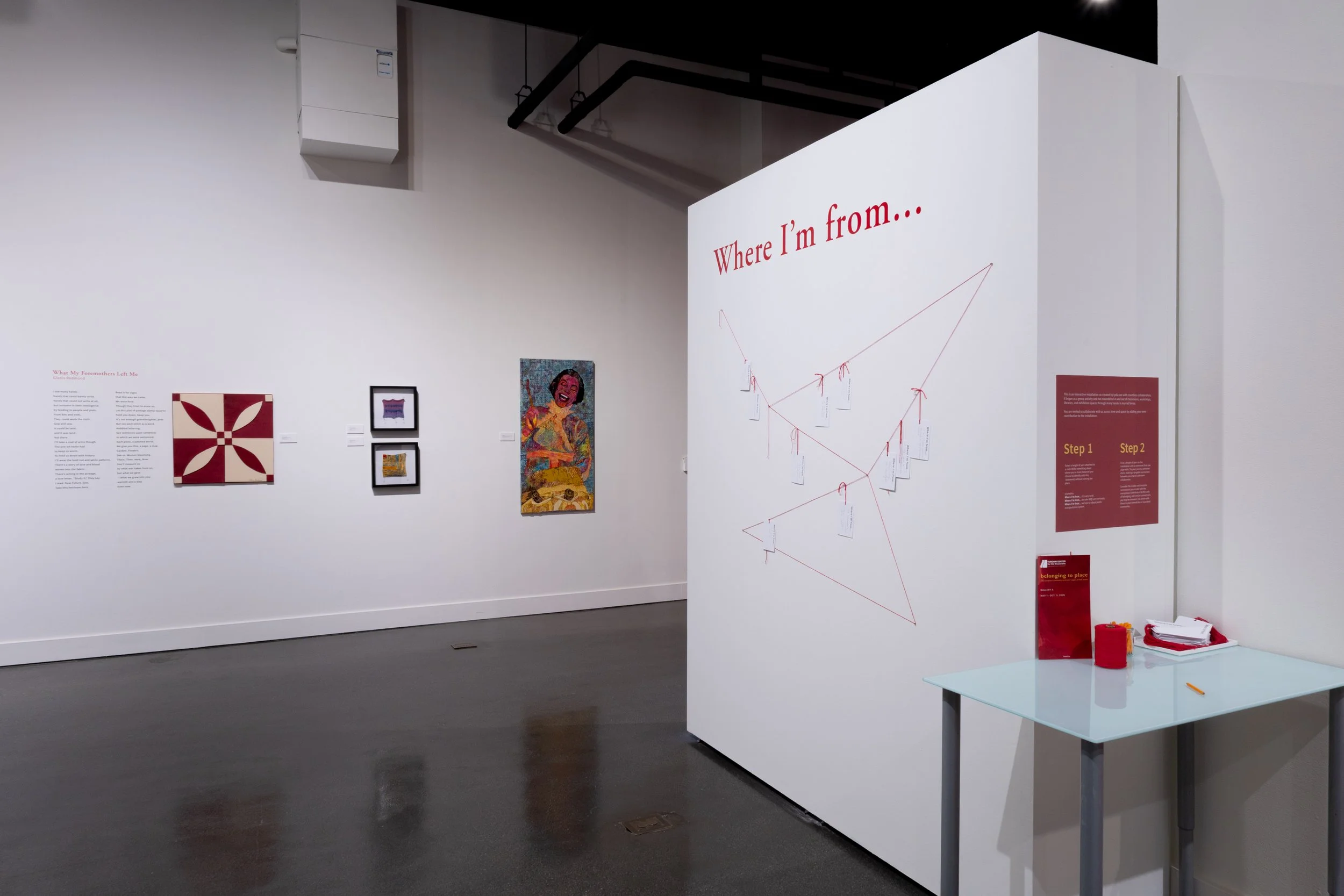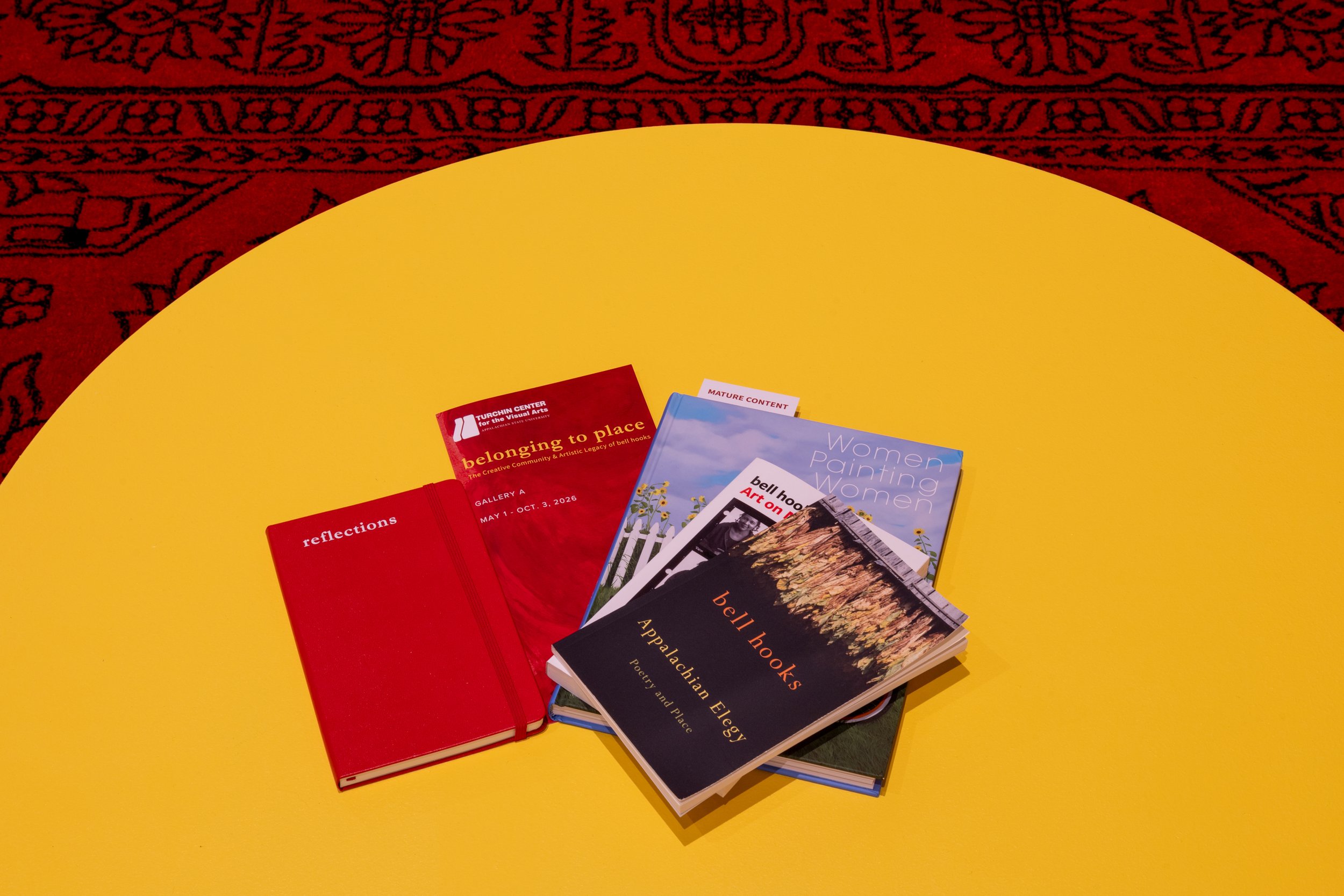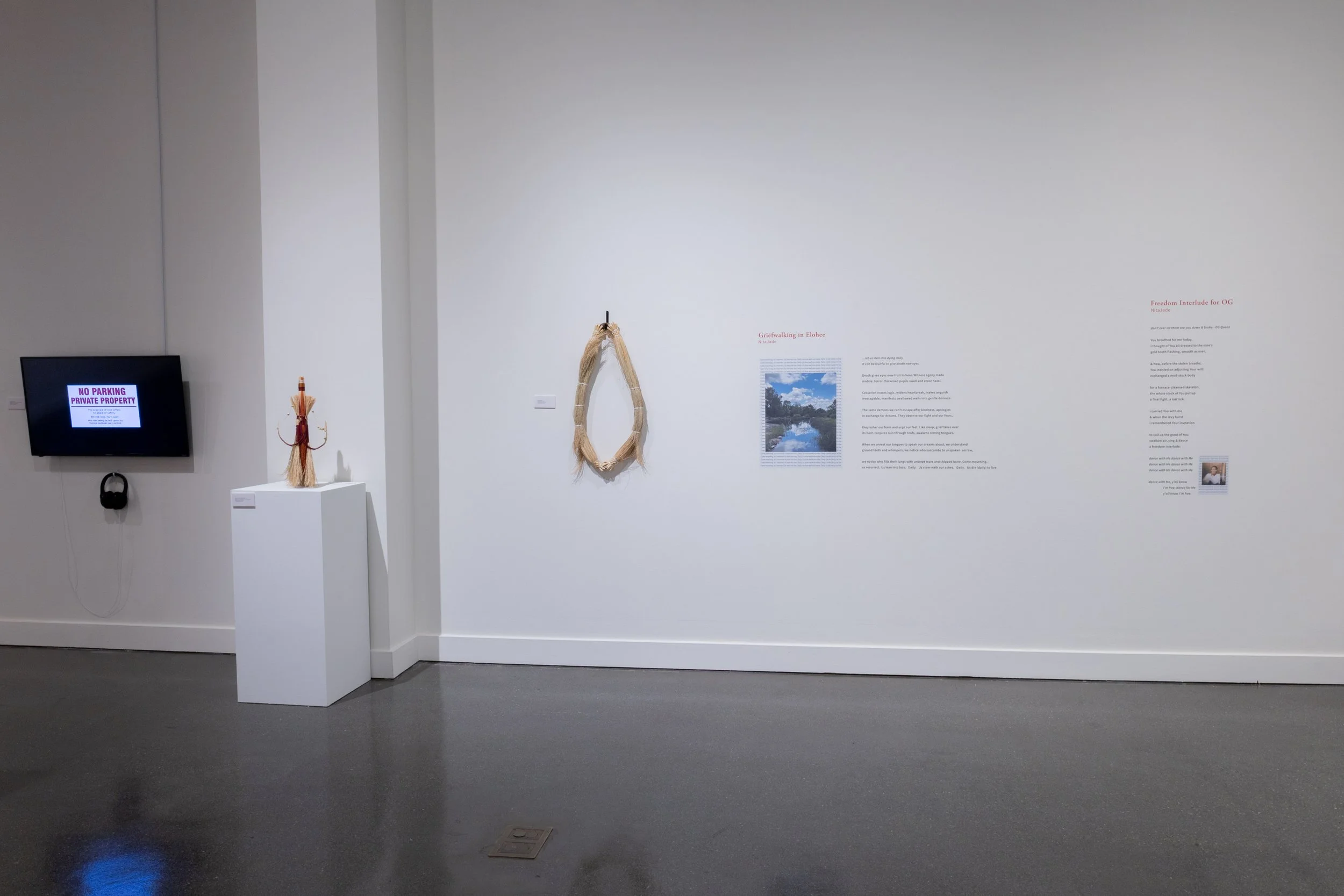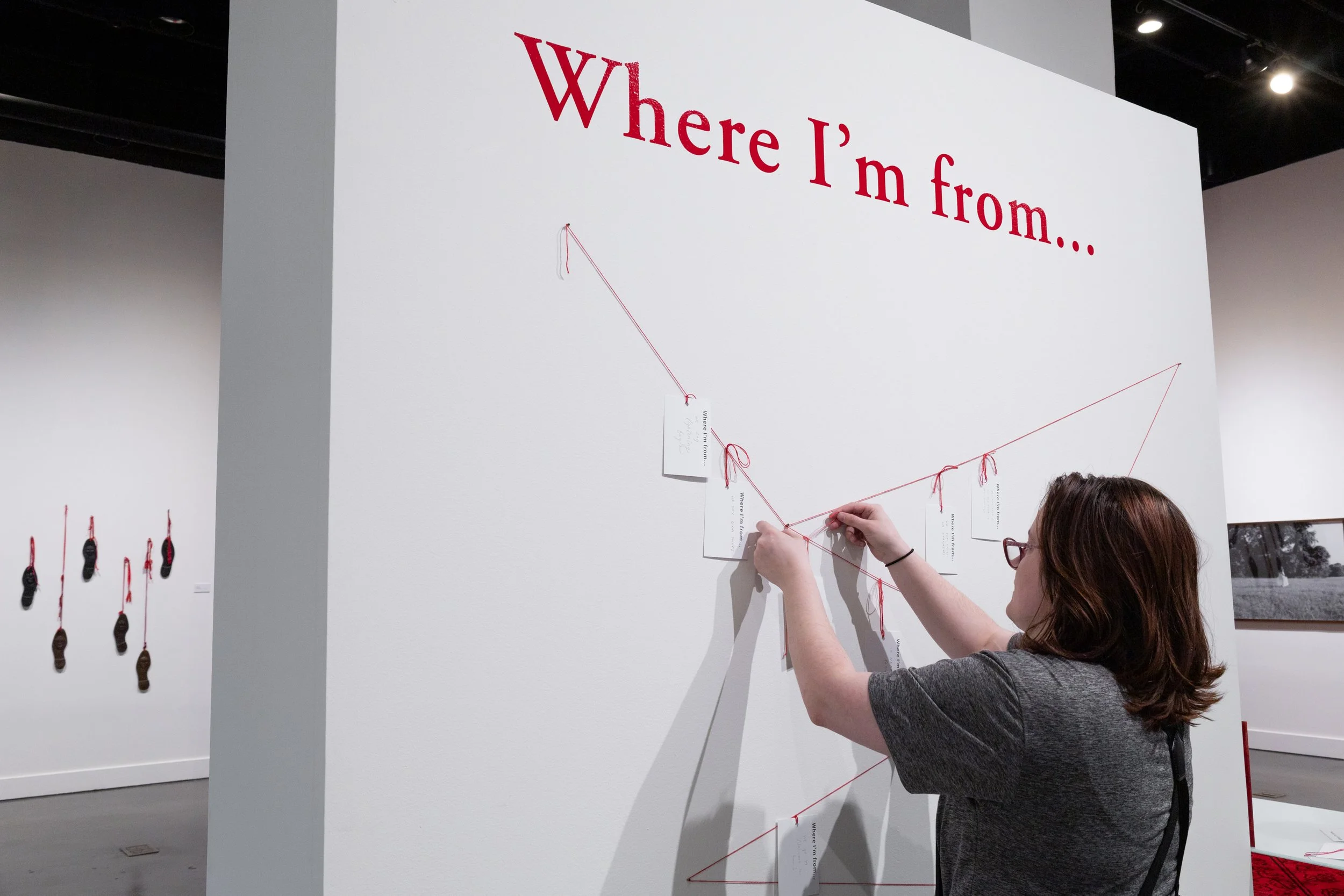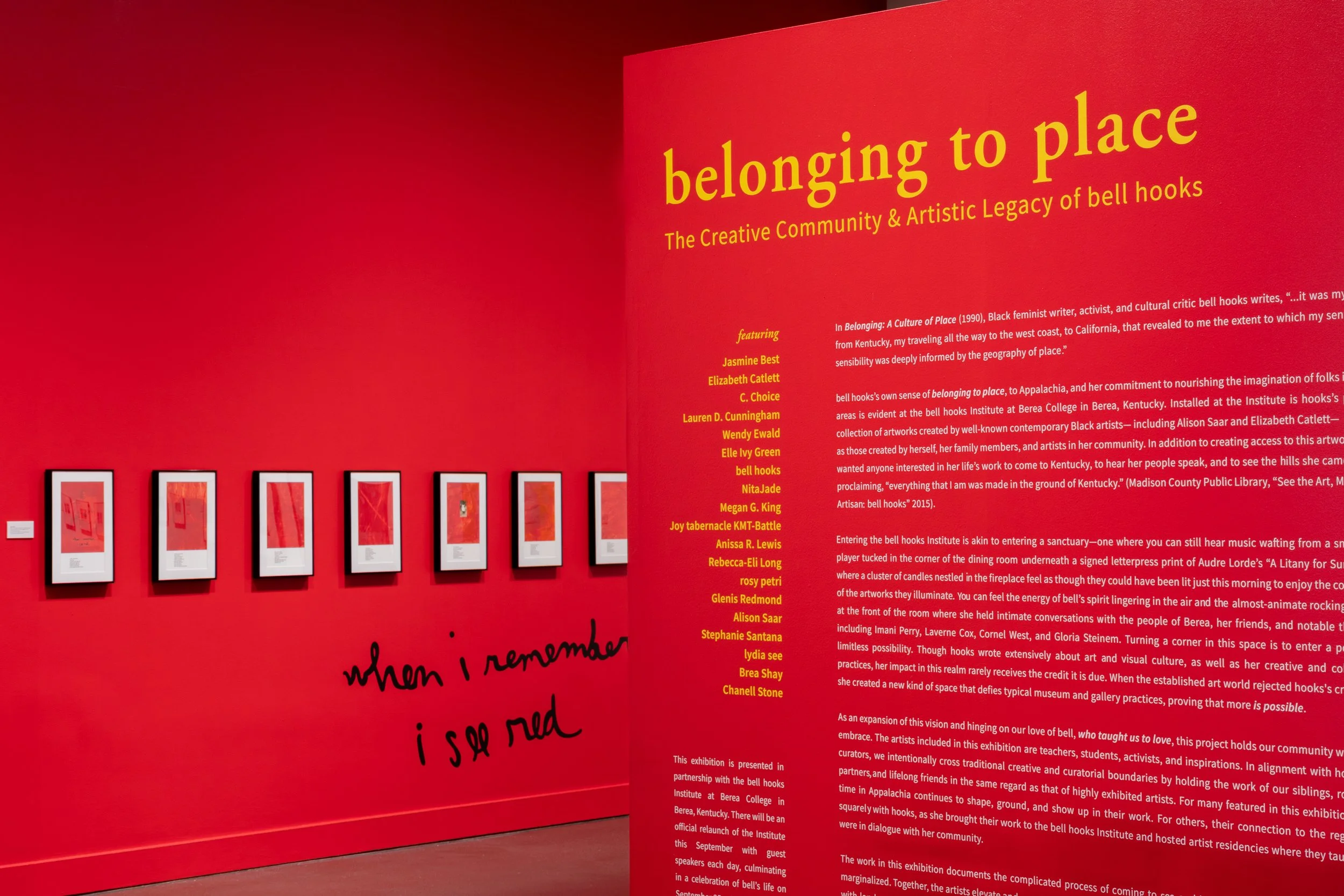
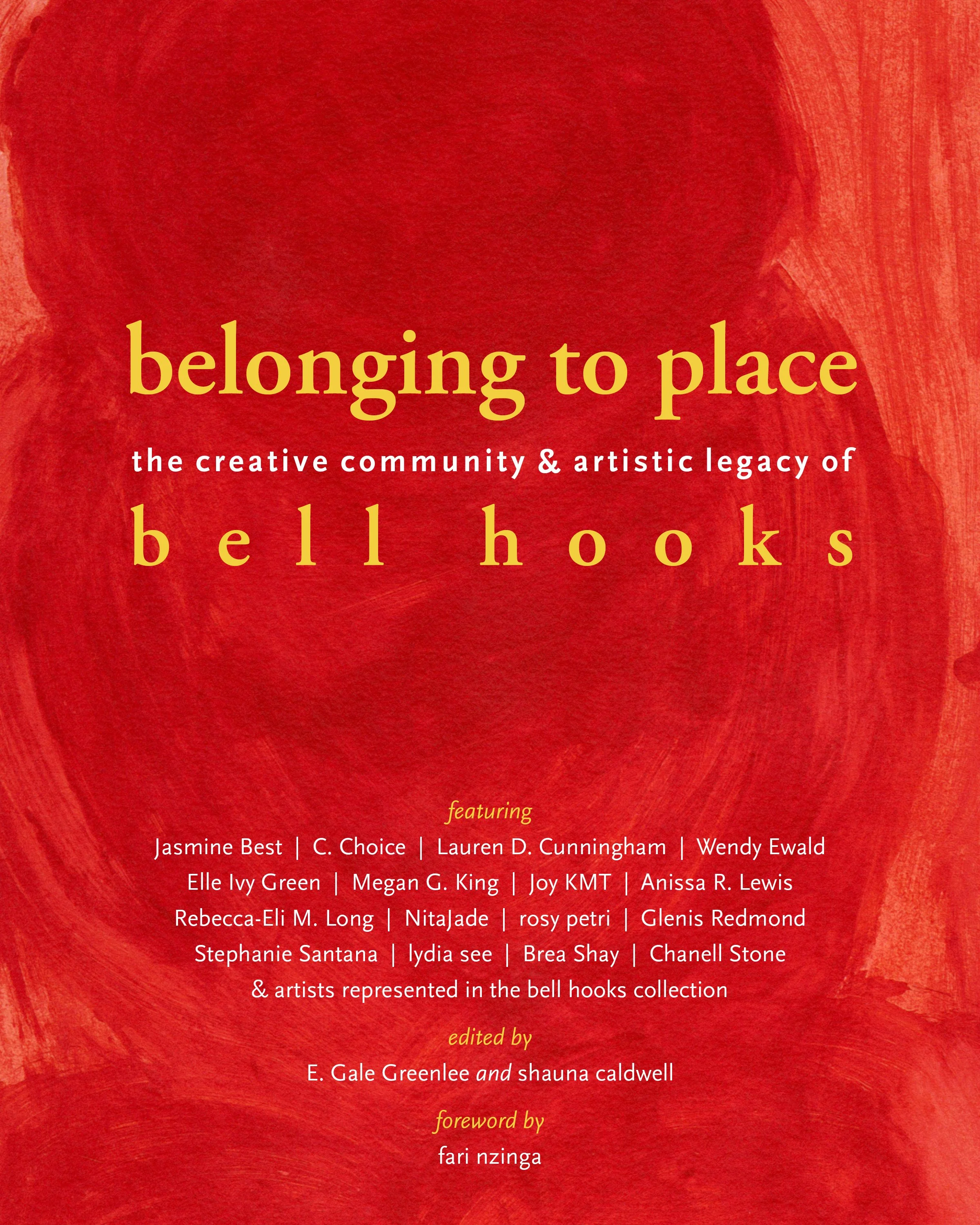
Exhibition and forthcoming publication, co-edited by E. Gale Greenlee and shauna caldwell, with the University Press of Kentucky, featuring Appalachian artists engaging with themes of belonging, grounded in bell hooks’s radical reclamation and vision for belonging within the region’s embrace. The book and exhibition project will publish a catalog of bell hooks’s personal art collection, an artist lecture by hooks about her own visual work and the bell hooks Institute, as well as contributions from Appalachian women and non-binary artists inspired by her work.
exhibition statement
In Belonging: A Culture of Place (1990), Black feminist writer, activist, and cultural critic bell hooks writes, “...it was my flight from Kentucky, my traveling all the way to the west coast, to California, that revealed to me the extent to which my sense and sensibility was deeply informed by the geography of place.”
bell hooks’s own sense of belonging to place, to Appalachia, and her commitment to nourishing the imagination of folks in rural areas is evident at the bell hooks Institute at Berea College in Berea, Kentucky, where her archive is also housed. Installed at the Institute is hooks’ private collection of artworks created by well-known contemporary Black artists— including Alison Saar and Elizabeth Catlett—as well as those created by hooks, her family members, and artists in her community. In addition to creating access to this artwork, she wanted anyone interested in her life’s work to come to Kentucky, to hear her people speak, and to see the hills she came from, proclaiming, “everything that I am was made in the ground of Kentucky.” (Madison County Public Library, “See the Art, Meet the Artisan: bell hooks” 2015). With this exhibition and forthcoming book publication, we hope to build upon the creative community that hooks engaged and supported throughout her life.
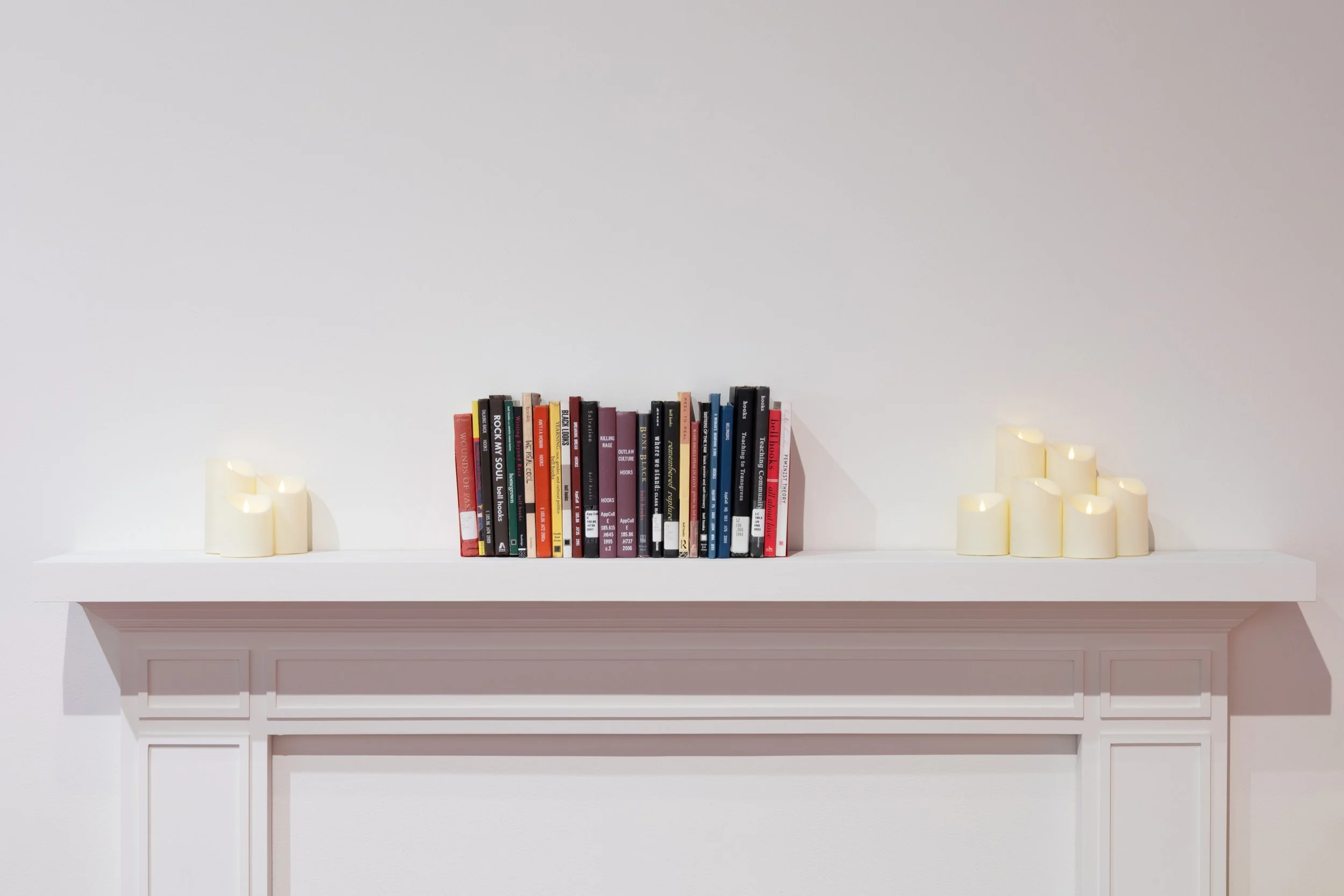
Entering the bell hooks Institute is akin to entering a sanctuary—one where you can still hear music wafting from a small CD player tucked in the corner of the dining room underneath a signed letterpress print of Audre Lorde’s “A Litany for Survival;” where a cluster of candles nestled in the fireplace feel as though they could have been lit just this morning to enjoy the company of the artworks they illuminate. You can feel the energy of bell’s spirit lingering in the air and the almost-animate rocking chairs at the front of the room where she held intimate conversations with the people of Berea, her friends, and notable thinkers including Imani Perry, Laverne Cox, Cornel West, and Gloria Steinem. Turning a corner in this space is to enter a portal of limitless possibility. Though hooks wrote extensively about art and visual culture, as well as her creative and collecting practices, her impact in this realm rarely receives the credit it is due. When the established art world rejected hooks's criticism, she created a new kind of space that defies typical museum and gallery practices, proving that more is possible.
As an expansion of this vision and hinging on our love of bell, who taught us to love, this project holds our community within its embrace. The artists included in this exhibition are teachers, students, activists, and inspirations. In alignment with hooks, as curators, we intentionally cross traditional creative and curatorial boundaries by holding the work of our siblings, romantic partners, and lifelong friends in the same regard as that of highly exhibited artists. For many featured in this exhibition, their time in Appalachia continues to shape, ground, and show up in their work. For others, their connection to the region lies squarely with hooks, as she brought their work to the bell hooks Institute and hosted artist residencies where they taught and were in dialogue with her community.
The work in this exhibition documents the complicated process of coming to see and belong to a place often exploited and marginalized. Together, the artists elevate and contribute to familial and collective histories that find sanctuary in conversation with land, our own imaginative processes, and the interwoven communities we are a part of. Our work reaches across time, space, and geography to pollinate one another, and us, as it builds upon the legacy of the artists represented at the bell hooks Institute.
– E. Gale Greenlee and shauna caldwell, Co-curators